Our Science

The Macrobiome
Platform

Parasitic helminths have co-evolved with vertebrate hosts for millions of years, developing highly sophisticated mechanisms to modulate immune responses. We harness these mechanisms as a source of next-generation biologics.

The Macrobiome Hypothesis

Modern progress has come at an unseen biological cost

Helminths have co-evolved with humans for millennia, educating the immune system. Their removal through modern sanitation has deprived the immune system of key regulatory challenge — driving the explosion of immune-mediated disease in industrialised populations.

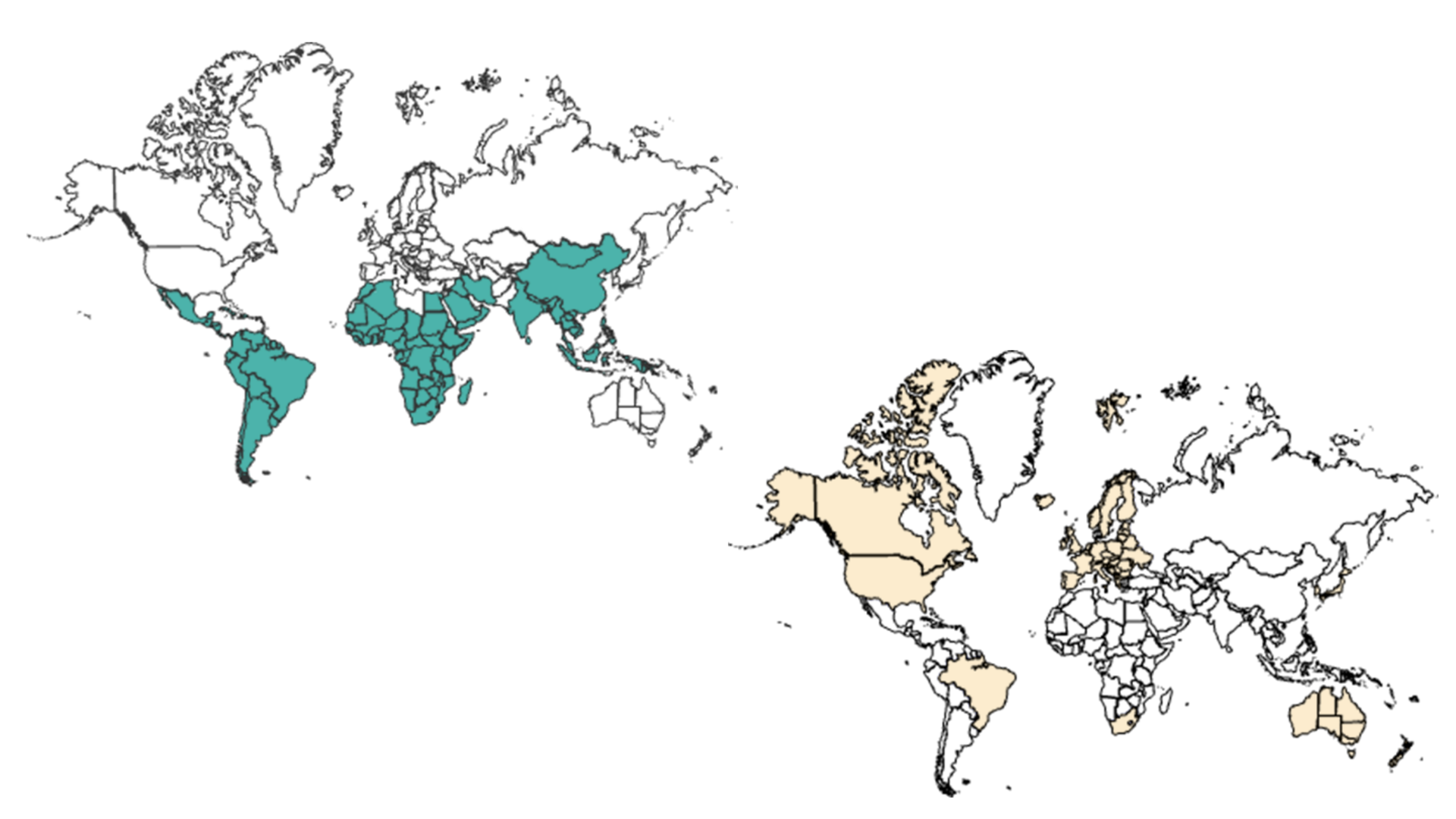
IBD incidence is significantly lower in countries where hookworms are endemic

IBD incidence increases when populations are dewormed

Dual world maps — teal countries have endemic hookworm and low IBD rates
Hookworm endemic regions (low IBD)
High IBD prevalence regions
IBD — A Global Epidemic
The Scale of the Crisis
Sources: Hracs et al., Nature 2025 (GIVES-21); Kaplan & Windsor, Nature Reviews GH 2025; GBD IBD Collaborators, Lancet 2020
7M+
People living with IBD worldwide — a chronic, lifelong disease with no cure
83.8%
Increase in global IBD prevalence since 1990 — from 3.7M to 6.8M in under three decades
1 in 100
People in early industrialised nations will live with IBD within the next decade. Sweden has already crossed this threshold.
+22.8%
Increase in new paediatric IBD cases globally since 1990. Peak age of onset: 15–29 years.
The largest IBD epidemiology study ever published — 522 population-based studies across 82 global regions — confirms IBD is no longer a Western disease. Every major world region is now affected and accelerating.Hracs et al., Nature 2025 — GIVES-21 Consortium
"At the turn of the twenty-first century, IBD incidence increased in newly industrialised and emerging regions in Africa, Asia and Latin America."Hracs et al., Nature 2025
+2.93%
Annual growth rate of IBD incidence in China — the fastest of any major economy globally
China's IBD incidence has nearly doubled in 30 years (0.74 → 1.4 per 100,000), 1990–2021
Stage 2→3
East Asia, the Middle East, and Eastern Europe are transitioning from rapid incidence acceleration into compounding prevalence
20 yrs
Projected timeline for newly industrialised countries to shift into compounding prevalence — the next major wave
2.5–3M
People with IBD in Europe — prevalence rising to ~1% in high-burden countries such as Sweden
2.4–3.1M
Americans living with IBD — prevalence estimates ranging from 0.5–0.7%
470,000
Projected Canadian IBD population by 2035 — representing 1.1% of the entire country
#1
Oceania records the world's highest Crohn's disease prevalence and the highest annual IBD incidence rate globally
01
Mechanism

Coevolutionary Biology

Unlike current immunotherapies with broad off-target effects, our helminth-derived biologics offer mechanistically differentiated mechanisms of action — refined over millions of years of host-parasite coevolution to modulate immune responses with precision.

The hookworm is the discovery engine. Not the medicine.

02
Evidence

Proof of Concept

The founders conducted randomised, placebo-controlled clinical trials using experimental hookworm therapy in patients with Crohn's disease, Coeliac disease, and Metabolic Syndrome.

  • Human clinical trials in Crohn's disease, Coeliac disease, and Metabolic Syndrome confirmed hookworm therapy suppresses immune-mediated disease
  • Mouse models reproduced the same benefit across colitis, asthma, rheumatoid arthritis, and metabolic disease
  • Crucially — the worms aren't needed. Injecting worm secretions alone was sufficient to prevent the same diseases in mouse models
03
Discovery

Secretome Library

We have built a recombinant secretome library of helminth-derived immunomodulatory proteins — more than 90 proteins expressed using pharma industry standard mammalian cell lines and screened for anti-inflammatory activity.

  • More than 90 proteins expressed using pharma industry standard mammalian cell lines
  • 20 hit proteins conferred significant protection in colitis models
  • Ex vivo validation of MBT protein candidates against human gut biopsy tissue from IBD patients